Last year, I sat down with a SaaS founder who was struggling to figure out how to find ICP for their business. His team was working around the clock. They were chasing every lead. Their sales deck looked perfect. But their growth? Flat as a pancake. "We just need more leads," he told me. But that wasn't the real problem. After digging into their data, we found something interesting. 80% of their revenue came from just one specific type of customer. Even better – these customers rarely churned and usually upgraded within six months. This research changed everything. Within three months of focusing only on similar customers:
The secret to finding the perfect customer isn't casting a wider net. It's knowing exactly who to fish for.

By 2025, 75% of companies will “break up” with poor-fit customers, according to Gartner. So in this guide, I'll show you why the traditional Ideal Customer Profile (ICP) approach is not right, the three pillars of ICP, and how to find your ideal customers with practical steps that worked for many of my clients. Let’s get started.
What is ICP?
An Ideal Customer Profile goes beyond basic target audience definitions. It's about identifying who your right customer is based on specific parameters. These parameters could include their budget capacity, the actual need for your solution, and criteria like revenue or employee size. As Gartner states “The ideal customer profile (ICP) defines the firmographic, environmental, and behavioral attributes of accounts that are expected to become a company’s most valuable customers.”
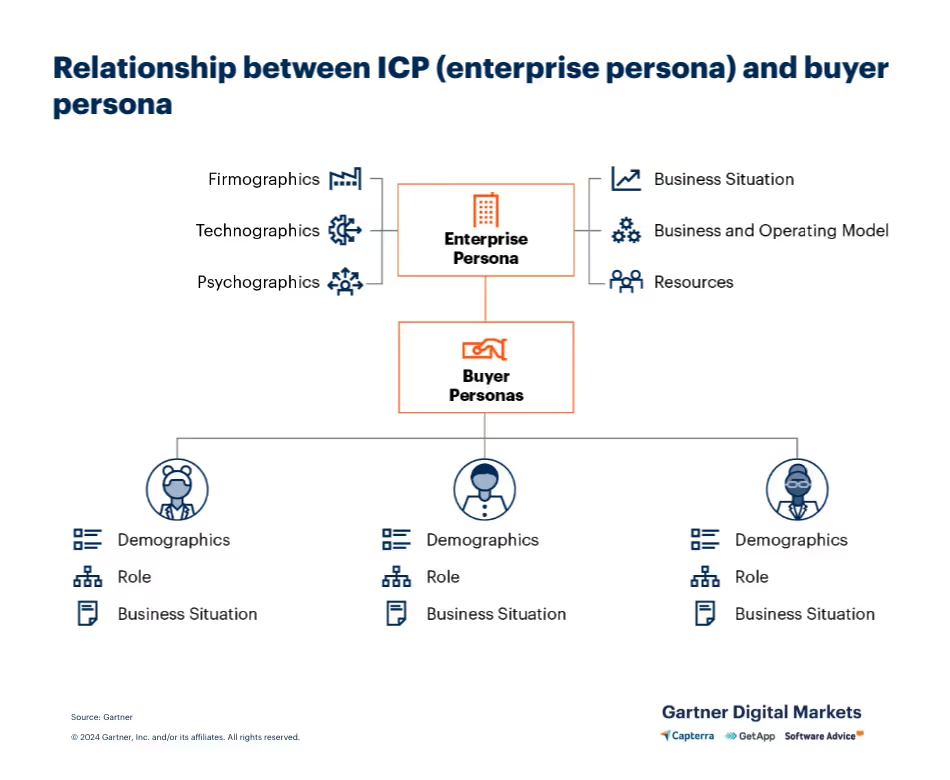
But more importantly, it's about understanding who will get the most value from your offering and be profitable for your business. According to a study by HubSpot, companies with a well-defined ICP are 50% more likely to acquire new customers.
How to Build a SaaS ICP: Quick Takeaway
Use these insights to build an SaaS ICP and an Anti-ICP that sharpen your marketing, sales, and product strategy.
Why Traditional ICP Approaches Fall Short
Take a look at most Ideal Customer Profiles (ICPs): "B2B companies, 100+ employees, $10M+ revenue, in the tech sector." These surface-level descriptors are just the tip of the iceberg. In my years helping SaaS companies, I've noticed something crucial: The most successful organizations don't just categorize customers by basic demographics. They dive deeper, obsessing over how their customers actually behave and operate. Traditional ICPs trap you in a misleading world of surface-level metrics:
These metrics create a false sense of understanding. They ignore the nuanced realities of customer success. What Truly Defines an Ideal Customer:
Think about your best customer right now. They're not great because they fit a perfect demographic profile. They're great because your solution fits perfectly into their world.
The Three Pillars of an Effective SaaS ICP
Organizations with a strong ideal customer profile achieve 68% higher account win rates than their competitors, according to Hubspot. These three pillars will help you identify real opportunities and avoid costly missteps. Trust me – I've seen companies double their growth by getting these right.
1. Pain Intensity Matrix
Let's start with a simple exercise I do with every SaaS founder. Take your last 10 customers and plot them on two axes:
For example, let’s consider a project management tool. Let’s try to map their ICP.
Your sweet spot? That top-right corner where problems are both serious and frequent. Companies targeting high pain (8+) and high frequency (8+) see:
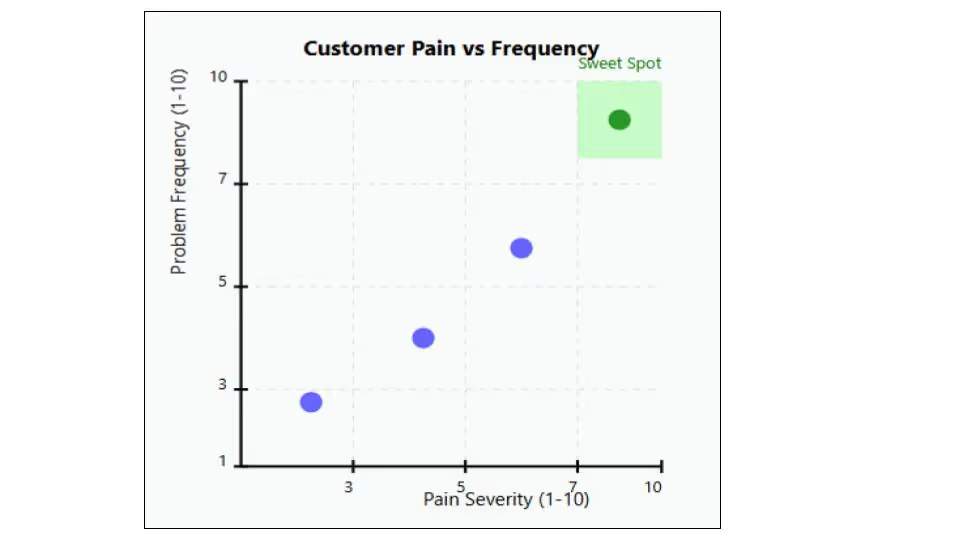
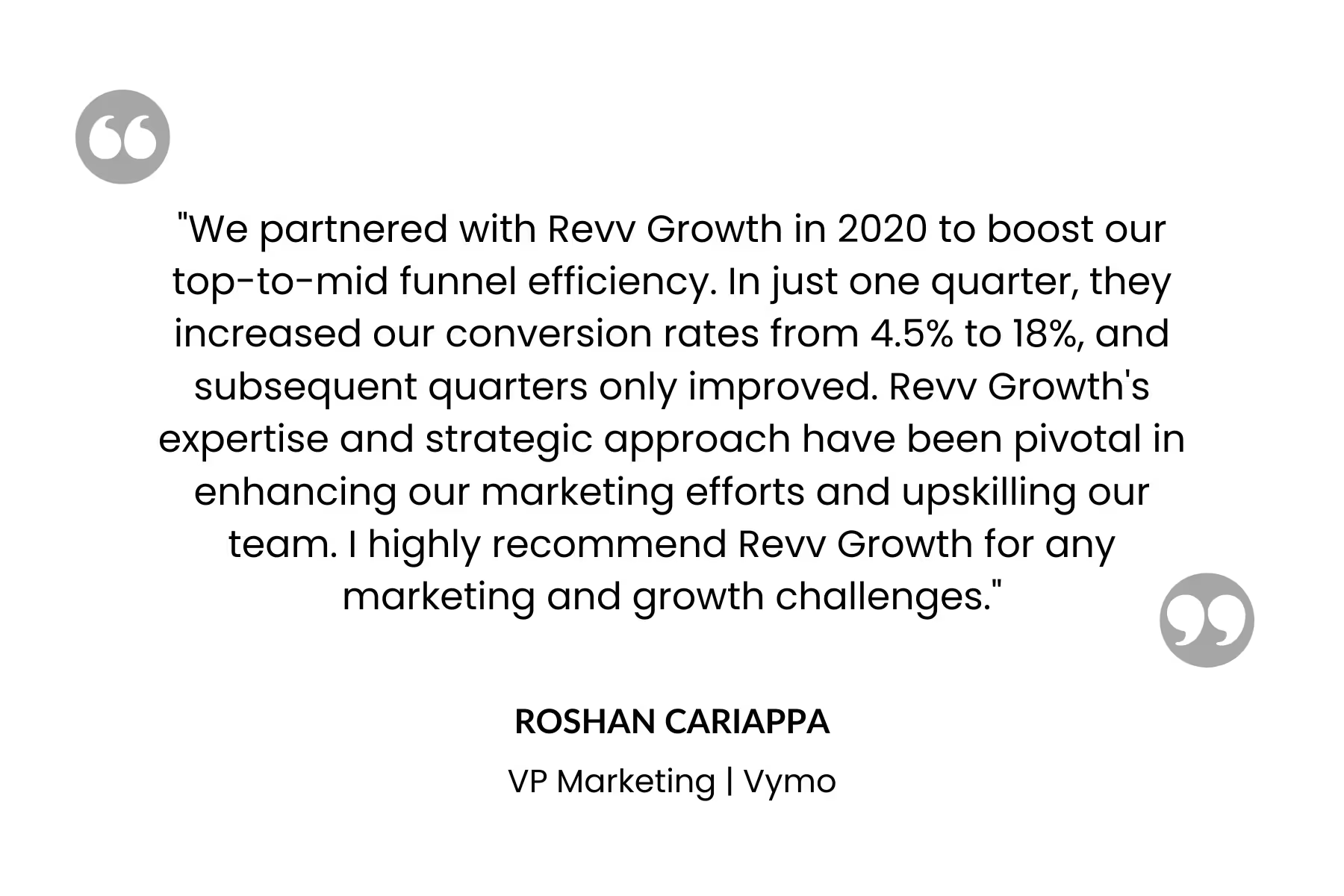
When we started working with Vymo, they struggled with a 4.5% MQL to SQL conversion rate. By implementing the pain intensity matrix, we identified their ideal customers as financial institutions experiencing daily sales tracking challenges (Pain Severity: 9/10) with constant manual data entry issues (Frequency: 9/10). Focusing on this precise pain point, we helped them increase their conversion rate to 18% and generated a $41.5M marketing-sourced pipeline.
2. Operational Readiness Indicators
Another important pillar is the operation readiness indicator. Stop asking "Can they pay?" Start asking "Can they succeed?" Here's your operational readiness checklist:
SoluteLabs, a product engineering firm previously relying solely on referrals, exemplifies the framework's effectiveness. By implementing the operational readiness framework SoluteLabs achieved remarkable growth through enhanced lead qualification while reducing implementation time by 60%.
3. Value Realization Timeline
The speed at which customers experience their first meaningful success with your product directly impacts conversion rates and long-term retention. Our data shows ideal timelines by product type:
Key warning indicators include implementation periods extending twice beyond standard timelines, unexpected training extensions, and suboptimal early adoption metrics. These signals often predict reduced customer satisfaction and higher churn risk. When Docsumo approached us, their conversion rate was stuck at 0.7%. By aligning their product demonstrations and trial period with customer value realization timelines, we helped them:
This approach has consistently delivered results across our client base. Whether it's Vymo's 4x increase in conversion rates or LeadSquared's 40% boost in bookings, these pillars form the foundation of successful ICP strategies.
How to Find Your SaaS ICP (A Data-Driven Approach)
According to Sales Insights Lab, 50% of your prospects are unlikely to be a good fit for what you sell." For years we tracked vanity metrics, chasing prestigious company names rather than analyzing meaningful patterns," reflected the CEO of a company during a recent consultation. If you are also doing that, then it is time to stop. Let's fix it. Here's your playbook for finding your true Ideal B2B Customer Profile (ICP).
1. Analyze Existing Customers
The first step in building your ICP is analyzing your existing customers, specifically your top 20%. These accounts reveal the strongest product-market fit, highest revenue retention, and best adoption patterns.
2. Gather Qualitative Insights
Numbers tell part of the story, but behavior, context, and decision-making patterns are equally important. Once you’ve identified your top performers, the next step is gathering qualitative insights to uncover why they succeed. This means studying their purchase journey, integration needs, feature adoption, support evolution, and expansion signals.
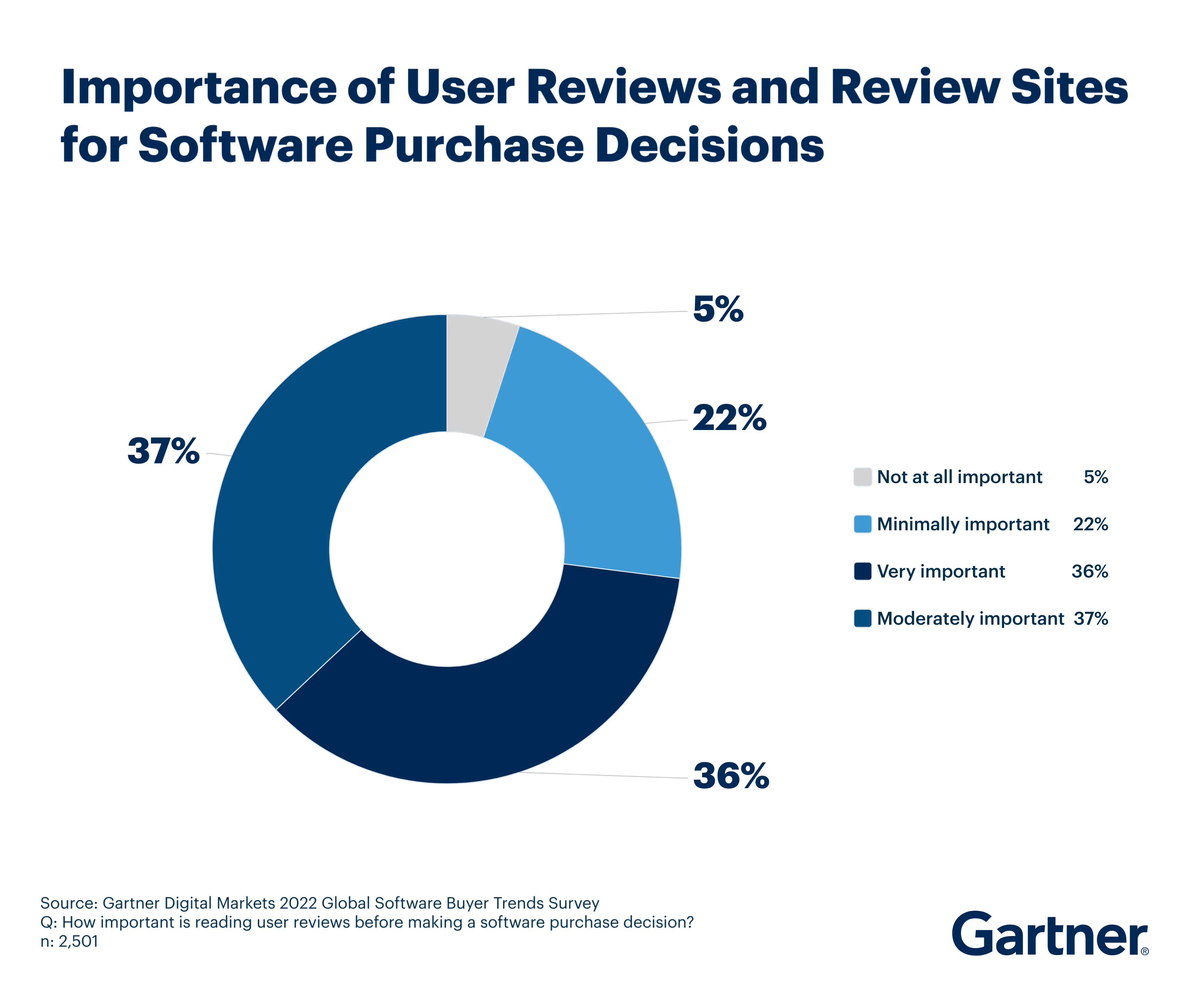
Additionally, 71% prioritize reviews from the past six months. Identifying prospects who actively engage with review sites can reveal patterns in your ideal customer profile, helping you tailor strategies to convert more prospects effectively.
Find the patterns to attract more customers to use your product features.

By mapping these success trends, you can fine-tune your Ideal customer profile further.
3. Research and Validate
No ICP is complete without understanding who isn’t a fit. This stage is about research and validation, where you analyze churned customers and failed implementations. By spotting negative patterns like unclear budget owners, prolonged “just exploring” cycles, or missing technical requirements, you can create an Anti-ICP. This ensures your team avoids customers likely to churn, while validating that your ICP points you toward accounts with lasting success.
Equally important is analyzing churned customers and failed implementations. In SaaS, the average churn rate is around 5%, and a “good” churn rate is considered 3% or less. Here are some key red flags to watch for:
To mitigate these issues, create an "Anti-ICP" profile. Remember, understanding who you shouldn’t target is as valuable as knowing your ideal customer base.
Read this→ Churn Prevention: 5 Strategies to Stop Customers from Leaving
Data-Driven ICP Refinement Process
A SaaS founder told me, "We know our ICP, but our teams keep bringing in the wrong customers." Sound familiar? Let's fix that with a practical scoring system and cross-functional alignment strategy.
Defining an B2B SaaS ICP isn’t a one-time project — it’s an ongoing process of refinement and application. The final step is operationalizing your ICP through qualification frameworks and scoring systems that guide marketing, sales, and customer success. This means setting must-have criteria, spotting strong positive indicators, identifying caution flags, and disqualifying poor-fit prospects early. Done right, your ICP becomes a living framework that drives alignment across teams and ensures you consistently attract and retain best-fit customers.
Clear Qualification Criteria
"The difference between a good customer and a great customer is rarely luck – it's strategic qualification." - Jason Lemkin, SaaStr Founder Your qualification framework needs to be simple enough for everyone to understand, yet sophisticated enough to catch nuances. Here's how to build it: Create a scoring rubric with these components:
1. Must-Have Characteristics (Deal Breakers)
Think of these as your non-negotiables. Your checklist should include:
2. Strong Positive Indicators
Look for companies that:
3. Caution Flags
These aren't deal-breakers but warrant deeper investigation:
4. Automatic Disqualifiers
Immediately disqualify when:
Cross-Functional Alignment
Remember the founder I mentioned earlier? Their problem wasn't just their ICP – it was also poor cross-team alignment. To make sure everyone is moving in the same direction ensure your Ideal customer profile influences:
1. Product Development Priorities
Your product team should validate every major feature against ICP needs. They now require:
2. Marketing Message and Channel Selection Your marketing shouldn't just attract leads – it should attract the right leads. Focus on:
3. Sales Qualification Process
Transform your sales process from "Can they buy?" to "Should they buy?" Our Client Vymo used this approach and saw remarkable results:
Their secret? A simple traffic light system:The Traffic Light System is a color-coded method for classifying leads based on how closely they align with your Ideal Customer Profile (ICP). It helps prioritize leads based on their potential to convert, saving time and resources by focusing on the highest-value opportunities. To apply the Traffic Light System, we use a lead scoring model that evaluates each prospect based on how closely they align with our Ideal Customer Profile (ICP). Here’s how it works:Scoring Setup:The lead scoring system is set up within Customer Relationship Management (CRM) software, where you can define specific criteria based on your ICP. This includes factors such as company size, industry, revenue, pain points, and decision-making process. Each lead is assigned points based on how closely they meet these criteria.Scoring Process:Each lead is scored on a scale of 0-100 based on their fit with our ICP. Here's how the scoring translates into the Traffic Light System:
Scoring Criteria:The criteria for scoring each lead are reviewed regularly and adjusted based on market trends and feedback from sales and marketing teams. This ensures the scoring system remains aligned with evolving business needs and customer expectations.And we applied this system when working with Vymo.At Vymo, we use this Traffic Light System to efficiently prioritize our leads. We applied this approach to 50 high-value accounts in the Indian banking and insurance space, focusing on Greenlight prospects that matched over 80% of our ICP. This allowed us to engage with accounts that were a perfect strategic fit, significantly reducing the time spent on nurturing less qualified leads.This method not only ensures you're targeting the right customers but also helps you allocate resources more effectively, ultimately improving sales efficiency and growth.Read more→ How to do lead nurturing for SaaS with a scoring method
4. Customer Success Onboarding
Your onboarding should reflect how your best customers implement. An ICP-aligned onboarding reduces time-to-value for SaaS companies. So build your process around:
4. Account Management Strategy
Direct your growth resources where they'll have the most impact. Create clear guidelines for:
By aligning every function with your ICP, you turn clarity into action and action into results. Remember, a well-defined ICP isn't just a document—it's the heartbeat of your growth strategy.
How to Measure You're ICP Effectiveness?
Let's talk about measuring what matters. As a SaaS marketer, I've seen that tracking the right metrics can reveal whether your ICP strategy is working or needs adjustment.
1. Sales Efficiency
The sales process tells you immediately if your ICP is accurate. When working with a mid-market SaaS company last year, we discovered their sales team spent twice as long closing deals that didn't match their ICP.Conversion Rate by ICP Fit ScoreYour conversion rates should vary dramatically based on ICP alignment. Companies with strong ICP matches typically see better conversion rates, while poor fits hover really less. Sales Cycle LengthICP-aligned deals move faster. One client found their perfect-fit customers closed in just 31 days, while others dragged beyond 72 days. Each misaligned ICP criteria adds roughly a week to your cycle.Customer Acquisition Cost (CAC)When Vymo realigned their ICP strategy, they saw a massive improvement in lead quality, reducing wasteful spending on poorly aligned prospects and achieving a more efficient cost-to-conversion ratio. This isn’t just about spending less—it’s about spending smarter.An effective ICP isn’t static; it evolves with data. The more you refine it, the clearer your path to sustainable growth becomes.
2. Customer Success Metrics
Success metrics reveal the long-term accuracy of your ICP. They tell you not just who bought, but who succeeded.Time to First ValueSpeed to value is critical. ICP-aligned customers typically achieve their first win within two weeks. Those outside your ICP might take 90 days or never reach full value. Monitor this carefully – it predicts churn better than any other metric.Product Adoption RateYour best-fit customers follow a predictable adoption curve. They should hit 40% feature adoption in week one and reach 80% by month three. Anything slower suggests an ICP mismatch.Net Promoter Score (NPS)NPS becomes meaningful when segmented by ICP fit. Perfect matches consistently score above 65, while poor fits rarely break 10. Use these gaps to refine your targeting.Customer Health ScoreCreate a holistic view using a 100-point system. Weight usage depth (40%), feature adoption (30%), support satisfaction (20%), and payment history (10%). This composite score predicts retention with surprising accuracy.
3. Financial Impact
The ultimate truth lies in financial performance. These metrics reveal whether your ICP strategy translates to business success.
1. Gross Revenue Retention: Retention rates are a strong indicator of alignment. Customers who are a great fit tend to stay longer and deliver consistent value, while poor matches often result in churn and lost revenue over time.
2. Net Revenue Retention: Your ideal customers should grow with your business. When ICP alignment is strong, these customers naturally expand their relationship, contributing to steady, long-term growth. Misaligned customers, however, can shrink your revenue and hurt scalability.Customer Lifetime ValueAligned customers provide lasting value. They tend to generate significantly higher returns compared to their acquisition cost, making them essential for driving sustainable growth. Misaligned customers, on the other hand, often fail to justify the initial investment.CAC Payback PeriodTime to recoup your investment tells a clear story. ICP-matched customers typically pay back their acquisition cost in 6-8 months, while others take 18+ months – if ever.Remember, these metrics work together to tell a complete story. As one successful founder of SilverStream Software David R. Skok said, "When we got serious about measuring ICP fit, we stopped debating who to target and started proving it with data."Review these metrics weekly with your leadership team. When numbers slip, it usually signals ICP drift. Use this dashboard to stay focused and grow efficiently with the right customers.
Common ICP Pitfalls to Avoid
The biggest ICP failures I've seen weren't from lack of data – they were from poor execution. Here are the critical pitfalls you need to avoid.
1. The Over-Restriction Trap
I recently worked with a SaaS company that defined their ICP so narrowly, that they limited their market to just 200 companies. While their conversion rate was high at 40%, their growth flatlined. Your ICP should guide growth, not restrict it. Consider these guardrails:
2. The Set-and-Forget Mistake
Markets evolve. Products evolve. Your ICP must evolve too. Our Client SoluteLabs was trapped in a word-of-mouth referral cycle, lacking structured marketing and sales processes. So we helped them establish a good marketing and sales framework, defining a clear, dynamic Ideal Customer Profile, moving beyond random referrals, and creating a structured approach to customer identification. SoluteLabs achieved significant growth in business development and client acquisition, transforming their approach from referral-dependent to strategically driven.
Here’s how you can implement it:
3. The Inconsistent Execution Problem
"Different teams, different ICPs" – this kills growth faster than any competitor.When different teams operate with misaligned customer profiles, your growth potential crumbles. Imagine sales targeting enterprise clients while marketing chases small businesses – this misalignment becomes a silent killer of your business potential.Create alignment through:
Make it stick:
One of our sales experts said it best: "When everyone plays by the same ICP rules, magic happens."
How to Implement Your ICP Strategy?
1. First 30 Days: Build Your Foundation
Start with a thorough analysis of your customer data. Pull revenue metrics, usage patterns, and success indicators from your top 25 customers and bottom 10 churned accounts.
Week 1-2:Create your initial ICP framework based on the patterns identified. Focus on:
Week 3-4:Develop a simple scoring system:
Train your teams on using this framework through the following:
2. 60-90 Days: Operationalize Your ICP
Month 2:Configure your CRM with custom fields for ICP scoring. One client saw 50% faster qualification after adding:
Align your marketing:
Refine your sales process:
3. 90+ Days: Optimize and Scale
Track these metrics religiously:
Gather feedback through:
Iterate based on data:
We helped Vymo transform their sales performance by implementing a structured ICP strategy. Starting with a deep analysis of customer data from Hubspot, we identified key success patterns and created a tailored ICP framework focused on revenue metrics, feature adoption, and technical fit in 30 days. By automating lead qualification and aligning sales and marketing processes, Vymo saw faster growth:
Final Thoughts
Through my work with top SaaS companies, I've seen ICP strategies double growth rates when executed properly. But success requires more than just defining your Ideal customer profile. You need:
Start small, but start today. Begin with analyzing your best customers. Look for patterns in their success. Build your framework step by step.Perfect customers aren't born – they're identified, nurtured, and grown. Your ICP will evolve as your product and market mature.The companies that win in SaaS aren't those with the biggest budgets or best features. They're the ones who know exactly who they serve and why.Want help in figuring out your ICP? Book a free call and let me help you find your target customers who stay, pay, and refer.


